 Skip to content

The Caribbean Cooperative MRVHub Project

The New Zealand Government’s Climate Smart Agriculture Initiative funded a regional programme led and coordinated through the Caribbean Cooperative Measurement, Reporting and Verification Hub (CCMRV Hub).
Scaling Agricultural Mitigation Across ASEAN: A Feasibility Assessment for Carbon Market Cooperation

Environmental Accounting Services (EAS), was commissioned to develop a shortlist and feasibility assessment of proven agricultural mitigation practices that have the potential to be scaled up in one or more ASEAN Member States.
Developing a National Biochar Soil Carbon Method for Aotearoa New Zealand

Biochar is rapidly emerging as a viable soil-based carbon removal pathway and is attracting increasing interest from countries seeking to expand and strengthen their National Greenhouse Gas Inventories (NGHGIs).
Supporting Australia’s Agricultural Sector to Prepare for Mandatory Climate Disclosures

As Australia progresses toward a low-emissions economy, the introduction of mandatory climate-related disclosures in January 2025 marked a significant shift for businesses—particularly in the agricultural sector.
Greenhouse Gas Reporting in the FLAG sector

As awareness grows around the environmental impacts across entire value chains, particularly in the agricultural sector, the Greenhouse Gas Protocol has released updated guidance to support improved estimation and reporting of emissions.
Pioneering Sustainable Fisheries: Moana New Zealand’s Journey to Achieving Science-Based Targets

Moana New Zealand, the largest Māori–owned fisheries company in Aotearoa (New Zealand), has long been a steward of some of the world’s most pristine and sustainably managed fisheries.
How Active Massage Cut Their Carbon Footprint by 59%

Over the past year*, Gray has achieved remarkable results, reducing her business’s greenhouse gas (GHG) emissions by 59%*. This success story demonstrates that even small businesses can make a substantial impact with the right support and guidance.
Enhancing Carbon and Energy Management Training: A Success Story with Carbon Energy Professionals

Carbon Energy Professionals (CEP) recognised the need to expand their certification offerings to meet the rising demand for education in this space, along with flexible, digital learning solutions.
Enhancing emissions transparency: Ruminati’s commitment to SBTi standards

This case study explores how EAS collaborated with Ruminati to align its emissions tracking tool with the standards and guidelines of the SBTi.
Pioneering sustainable event management with QLDC, Wastebusters, and WAO
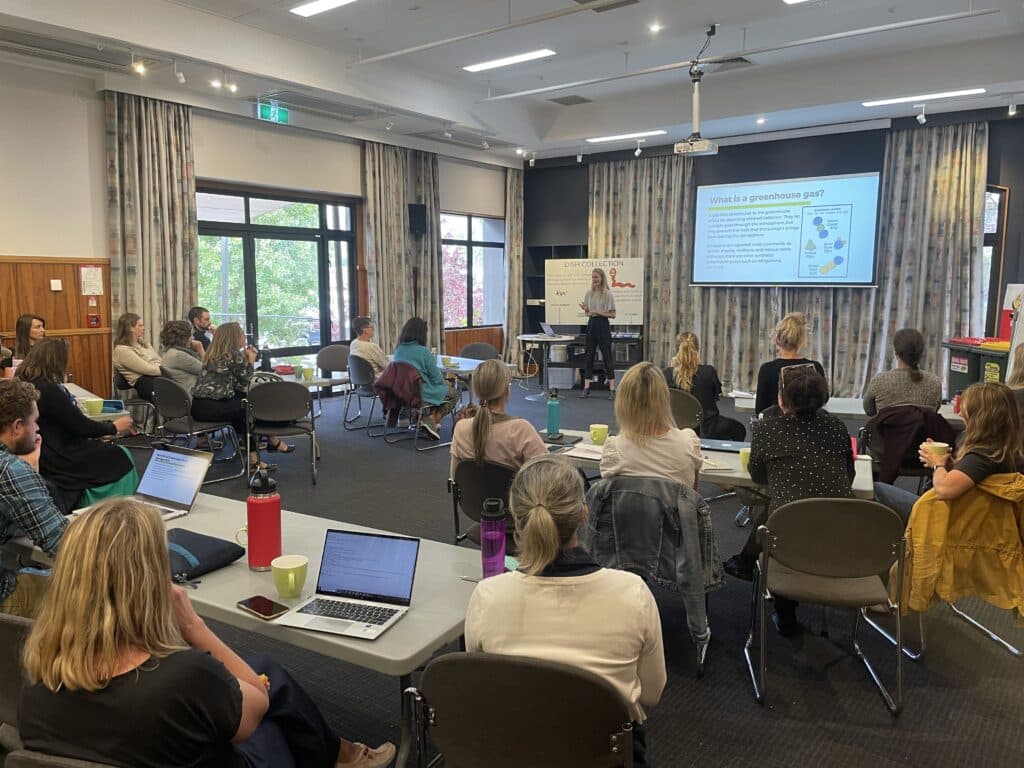
Queenstown Lakes District Council (QLDC) and Wastebusters, in partnership with WAO, are proactively working to improve the understanding of the environmental impact of events.